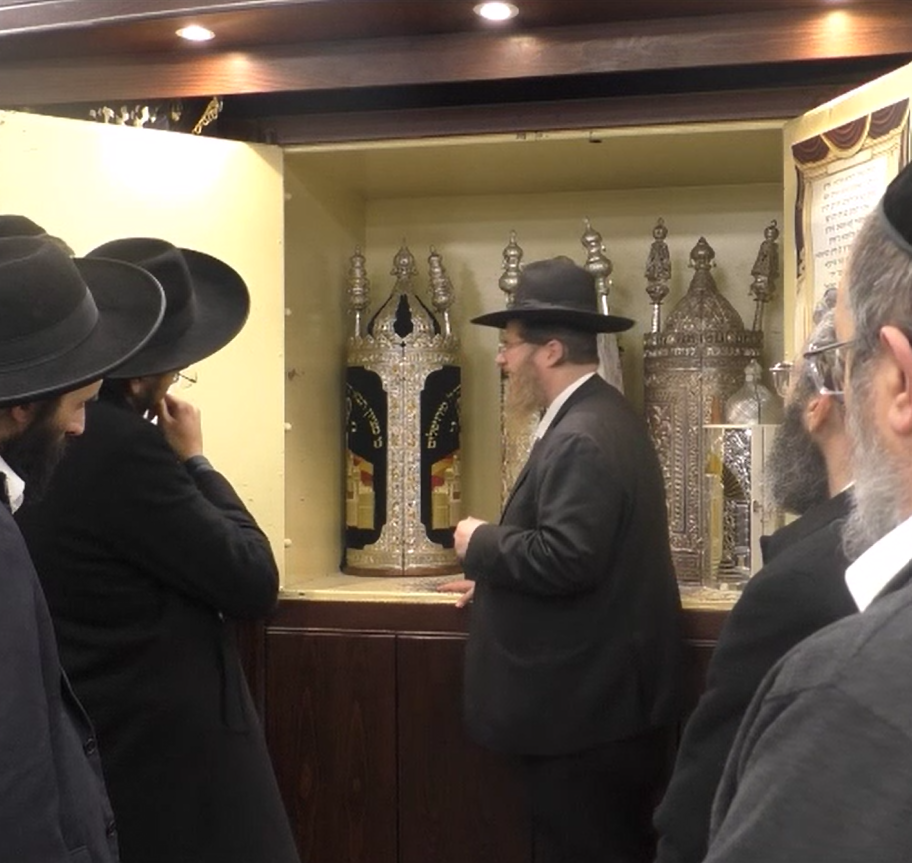

הרה"ג אליהו בחבוט לומד
Country: ישראל

Question

Dear Rabbi, I read that Tu B’Av (the festival of dancing) is an auspicious day for finding a match. I would like to know what is recommended to do on this day in order to merit finding a suitable match. Baruch Hashem, I am not having unusual difficulty in finding a match, but it is time to begin looking for a shidduch…

Answer

The main thing to do on this day in order to find a match is to pray to Hashem wholeheartedly. For this day is indeed auspicious for the acceptance of prayers—in general, and particularly for finding a match, since this is the theme of the day. As we find in the words of the kabbalist Rabbi Menachem Azariah of Fano, zt”l, whose discussion of this was printed in Rabbeinu the Arizal’s Pri Etz Chaim, שער כ”ג, folio 111a: after listing the seven favorable events that occurred to our forefathers on Tu B’Av, he concludes, “Therefore, increase prayer on that day.” End quote. [Although this requires examination in light of the version in his work Me’ah Keshitah, chapter 81, and this is not the place to elaborate. Nevertheless, the point is correct in itself: since this day is considered one of the “festivals of Israel,” as Chazal said, it is certainly auspicious for the acceptance of prayers.]

Likewise, all segulot for finding a match, when performed on Tu B’Av, would appear to be more effective on this day.

It further appears that we may learn from the Mishnah in Ta’anit mentioned above that even the hishtadlut undertaken to obtain a shidduch—hishtadlut in holiness and purity, as mentioned above; a contemporary example would be telephoning a shadchan or shadchanit—when undertaken on Tu B’Av, is especially capable of bearing fruit more than on ordinary days. [Of course, one should not wait for Tu B’Av to make such efforts, for in matters of shidduchim, one hour earlier is always preferable, as Chazal explain in Mo’ed Katan 18b. Rather, one may add further hishtadlut on this day.]

The Auspicious Quality of the Holy Day of Tu B’Av for Shidduchim and Matches

Tu B’Av is a very great day. Chazal stated that “there were no festivals for Israel like the fifteenth of Av and Yom Kippur.” In the era of the Beit HaMikdash, this was a day of shidduchim, as explained in the Mishnah, Ta’anit 26b, and more extensively in the beraita brought in the Gemara there, 31a. This certainly indicates that Chazal knew that this day is especially auspicious for finding a match. With Hashem’s help, below we shall cite the words of Chazal on this matter and present what we have written, with Hashem’s help, to explain why this day in particular is the day of shidduchim.

Segulah of Rabbi Matya ben Charash – 18 candles (1)The fact that this day is auspicious for matters of marriage is also evident from the fact that some of the favorable events that occurred to our forefathers on this date concerned the possibility of marriage. As explained in Ta’anit 30b, when the Jewish people consisted of twelve tribes, it was established on Tu B’Av that members of the tribes were permitted to marry one another without restriction—that is, the prohibition stated in the passage concerning the daughters of Tzelofchad applied only to that generation. On that date, they also again permitted marriage with members of the tribe of Binyamin, following the marriage ban imposed on that tribe after the incident of the concubine at Givah.

According to the teachings of sod, the reason this day is auspicious for matches is that on this day there is an elevation of the Shechinah, as explained in the Zohar, Parashat Vayakhel 195a; cited by Maran the Chida in Moreh, middle of סימן ח, אות רמ”ב; by the Chida’s disciple in Mo’ed Lechol Chai, סימן י, אות צ”ז; and by Rabbi Yosef Chaim, the Ben Ish Chai, first year, Parashat Devarim, אות א, among others. See also the Rishon LeTzion, Rabbi Yitzchak Yosef, shlita, in Yalkut Yosef, new edition, Hilchot Ta’anit, p. 475; and the precious scholar of our Beit Midrash, Rabbi Shmuel Cohen, shlita, in his Divrei Shmuel al HaMo’adim, p. 151. There is also an allusion to this in Tosafot, Bava Batra 121a, s.v. Yom, that the Shechinah did not rest upon the generation in the wilderness until Tu B’Av. The greater the indwelling of the Shechinah among the Jewish people, the more readily one can attain a suitable match, for the entire purpose of marriage is to attain the state of “the Shechinah is between them,” as stated in Sotah 17a. A similar explanation is offered in Lema’an Shechinatecha, vol. 2, p. 491.

[Accordingly, one can understand how imperative it is not to permit any frivolity between young men and women on this day—or on any other day, chas veshalom—for through a lack of the required tzniut, one “drives away” the Shechinah, as we explained elsewhere, and consequently the possibility of attaining a proper and suitable match becomes far more distant.]

The Bnei Yissaschar, zt”l (Tammuz, ma’amar 4, אותיות ב–ג), explains that Tu B’Av is forty days before the twenty-fifth of Elul, the day of the world’s creation. Thus, with respect to creation as a whole, it has a parallel to “forty days before the formation of the fetus, a Heavenly Voice goes forth and says: the daughter of so-and-so is for so-and-so.” Based on his words, rabbinic works have written that this is why the day was established as one auspicious for matches. This is also written in She’elot Uteshuvot Baruch She’amar, Orach Chaim, vol. 3, סימן קנ”ט, and by Rabbi Moshe Gross, shlita, in Beyom Chatunato, p. 32, among others.

Further on, we shall also bring what we have written, with Hashem’s help, to explain at length the reason for the connection between Tu B’Av—and Yom Kippur—and shidduchim.

What Should One Do on Tu B’Av to Merit a Suitable Match?

The main thing to do on this day in order to find a match is to pray to Hashem wholeheartedly. For this day is indeed auspicious for the acceptance of prayers—in general, and particularly for finding a match, since this is the theme of the day. As we find in the words of the kabbalist Rabbi Menachem Azariah of Fano, zt”l, whose discussion of this was printed in Rabbeinu the Arizal’s Pri Etz Chaim, שער כ”ג, folio 111a: after listing the seven favorable events that occurred to our forefathers on Tu B’Av, he concludes, “Therefore, increase prayer on that day.” End quote. [Although this requires examination in light of the version in his work Me’ah Keshitah, chapter 81, and this is not the place to elaborate. Nevertheless, the point is correct in itself: since this day is considered one of the “festivals of Israel,” as Chazal said, it is certainly auspicious for the acceptance of prayers.]

Likewise, all segulot for finding a match, when performed on Tu B’Av, would appear to be more effective on this day.

It further appears that we may learn from the Mishnah in Ta’anit mentioned above that even the hishtadlut undertaken to obtain a shidduch—hishtadlut in holiness and purity, as mentioned above; a contemporary example would be telephoning a shadchan or shadchanit—when undertaken on Tu B’Av, is especially capable of bearing fruit more than on ordinary days. [Of course, one should not wait for Tu B’Av to make such efforts, for in matters of shidduchim, one hour earlier is always preferable, as Chazal explain in Mo’ed Katan 18b. Rather, one may add further hishtadlut on this day.]

A More Detailed Explanation, with Hashem’s Help: “Yom Kippur and Tu B’Av—the Days of Shidduchim”

To complete the discussion, I considered it appropriate to include here what we wrote, with Hashem’s help, in the booklet Chazor VeShoshan on marriage, presently printed within my modest work Shoshanat HaAmakim on chuppah and kiddushin, explaining the above-mentioned words of Chazal in Ta’anit. This is the beginning, with Hashem’s help:

“Rabban Shimon ben Gamliel said: There were no festivals for Israel like the fifteenth of Av and Yom Kippur, on which the daughters of ירושלים went out in white garments, etc., and the daughters of ירושלים went out and danced in the vineyards. What would they say? ‘Young man, lift up your eyes and see whom you choose. Do not set your eyes on beauty; set your eyes on family: “Charm is false and beauty is vain; a woman who fears Hashem, she shall be praised,”’ etc.”
(Mishnah Ta’anit 26b)
The Gemara (31a) further brings from a beraita: “Our Rabbis taught: What would the beautiful among them say? ‘Set your eyes on beauty, for a woman is only for beauty.’ What would those of distinguished lineage among them say? ‘Set your eyes on family, for a woman is only for children.’ What would the unattractive among them say? ‘Take your acquisition for the sake of Heaven,’ etc.” End quote.
The teaching of our Rabbis, z”l, in this exalted matter was given sealed and hidden, for these words are seemingly puzzling and even appear to contradict one another, as I shall explain:
A. Why were Tu B’Av and the awe-inspiring day of Yom Kippur specifically chosen to be “days of shidduchim”?!
B. Rabban Shimon ben Gamliel’s wording implies that the very fact that they went out in white garments was part of why these days were “good” days. This clearly requires explanation.
C. Why was it necessary to tell us the color of the clothing they wore, and why did they in fact wear white specifically?
D. There appears to be an outright contradiction between the Gemara on 26b, the Mishnah, and the Gemara on 31a, the beraita. For the Mishnah states that the daughters—all of them, it would seem—said: “Do not set your eyes on beauty; set your eyes on family,” whereas the beraita says that the beautiful among them said: “Set your eyes on beauty,” etc.
E. We must also consider the difference between the Mishnah and the beraita. The Mishnah explains that a distinguished “family” is an advantage with regard to “a woman who fears Hashem,” having been educated upon the foundations of Torah and yirat Shamayim. The beraita, however, explains differently: the advantage of “family” concerns children—plainly, because lineage helps the children to be good; and Rashi explains that because of their lineage, people would eagerly seek to marry these children. In either case, the family’s advantage in the beraita is not the quality of “a woman who fears Hashem.”
F. More puzzling still, the statement “a woman is only for beauty” seemingly contradicts “a woman is only for children,” since the expression “only …” means that nothing else exists besides it.
G. The beraita says “the beautiful among them” in the feminine form, “those of distinguished lineage among them” in the feminine form, but “the unattractive among them” in the masculine form. This requires explanation.
H. More generally, how could they encourage the young men to take a wife not for the sake of Heaven by telling them to set their eyes on beauty? Likewise, according to the version in Ein Yaakov, which also reads that the wealthy ones said, “Set your eyes on wealth”—this is astonishing.
What appears to explain this, with Heavenly assistance, is to preface the essential nature of Yom Kippur and Tu B’Av.
Yom Kippur is the day on which Hashem forgave the Jewish people for the sin of the Golden Calf (Tanchuma, Ki Tisa 31). Tu B’Av is the day on which Hashem forgave them for the sin of the spies (Midrash Shmuel 32:5). The “forgiveness” mentioned here does not mean that the sin was erased, for to this day we atone for these two sins. Rather, “forgiveness” means that despite the blemish and spiritual dullness caused by the sin that still remain, Hashem desires us and wants us. He became reconciled with us. This is as the Rambam writes in Hilchot Teshuvah 7:6:
“Teshuvah brings near those who are distant. Yesterday, this person was despised before the Omnipresent, repulsive, distant, and an abomination; today he is beloved, desirable, close, and a friend.” End quote. That is, even though sins are not atoned for in one day—as the Rambam himself writes in chapter 1, that there are sins atoned for only through suffering or, Heaven forbid, death—nevertheless, through teshuvah one immediately becomes acceptable before the Omnipresent: “beloved, desirable, close, and a friend.”
As is known, when an event occurred in the days of the forefathers or at the time of the Exodus, the influence of that event was established for all generations; every year, the forces and influences of that day return. Therefore, Yom Kippur and Tu B’Av are endowed with great power from the central influence of those days: to be reconciled with and desire another despite the shortcomings and flaws that still exist.
People commonly think that the period of choosing a spouse—shidduchim—is merely a “period” in life, like summer or winter. The truth is that shidduchim are a test, a central test in a person’s life, one that determines his entire future. During shidduchim, a person must know that the essential principle is: “A woman who fears Hashem, she shall be praised.” To merit and attain a woman who fears Hashem, he must be reconciled despite finding some minor material shortcomings in her, for it is almost impossible to find a girl who possesses every virtue; Torah and greatness are not found in one place. How many young men and women remain single for a long time because they focus on trivial flaws, whether external beauty, improved financial circumstances, or the like. Therefore, one who wishes to find a spouse in accordance with the Creator’s will should examine above all whether she is “a woman who fears Hashem,” and should not attach excessive importance to any shortcomings. Certainly, there are times when genuine material defects may warrant declining a shidduch. But the reasons many now accept for rejecting a shidduch are not in the spirit of the Torah tradition of Israel. The Chafetz Chaim already wrote in the laws of lashon hara that, in inquiries for shidduchim, one should reveal only serious deficiencies and speak only of the positive qualities. If that is the information one may receive according to halachah, then certainly that is also how one should conduct oneself when choosing a spouse.
Accordingly, the days most auspicious for a match and a shidduch are Tu B’Av and Yom Kippur, when a Jew can more readily desire and be reconciled despite all kinds of minor flaws, so that he will not reject a proposal over something unworthy of rejection. These are days of favor, when a person merits Heavenly assistance to overlook another’s shortcomings.
This explains the matter of the “white garments,” for white symbolizes something smooth and without stains or blemishes, as it is written: “Though your sins be like scarlet, they shall become white as snow” (Yeshayahu 1:18). Similarly, physicians wear white because it symbolizes cleanliness. So too, on that day one was meant to view all minor faults and deficiencies as though they did not exist, and to see only: “A woman who fears Hashem, she shall be praised.” We can now understand the plain meaning of Rabban Shimon ben Gamliel’s wording in the Mishnah: wearing white garments is part of why these days are deemed festivals, because the white garments symbolize the great Heavenly assistance that rests upon these days.
Chazal showed us a clear path for withstanding this test. When one encounters a proposal involving a woman of good character, whose yirat Elokim is evident, but his heart hesitates because of certain material shortcomings, he must magnify in his eyes all her virtues and positive qualities, whatever they may be. This is the meaning of the statements, “a woman is only for beauty” and “a woman is only for children.” After the young man who seeks his lost object has already examined the proposal spiritually, to ascertain that she fears Heaven and will be a helpmate in his avodat Hashem, he must then overcome himself and give importance to the virtues found in that proposal, as though the sole virtue in the world were precisely the virtue that this woman possesses. If she is beautiful, “a woman is only for beauty”; if she is of distinguished lineage, “a woman is only for children.” If he follows Chazal’s counsel, then even if he finds that his prospective bride lacks certain virtues, this deficiency will not become an unbearable test, for he has already become reconciled through the virtues she does possess.
We can now explain why the end of the beraita says “the unattractive among them” in the masculine form. In light of the test before him, a person ought not perceive unattractiveness at all. Had a person acted in accordance with the Creator’s will and made use of the powers and segulot of these days, he would, so to speak, see no physical unattractiveness, for this is only a minor deficiency. Indeed, this is not merely figurative, for in Heaven such a matter is not considered a defect whatsoever, as it is said: “Charm is false and beauty is vain.” Beauty and charm have no hold in the true Heavenly reality, for falsehood does not endure and vanity has no substance. Naturally, every young man in the period of shidduchim is expected to attain as much as possible this Heavenly perspective, in which beauty and vanity have no significance, for he certainly should not live with falsehood and vanity. Thus, the “deficiency” of the “unattractive ones” exists only because of empty imaginings and human pettiness. Therefore, the unattractive girls are called “the unattractive among them”—meaning that the real deficiency lies in the young men, who caused unattractiveness to become a “value.”
Therefore, those “unattractive” girls warn: “Take your acquisition for the sake of Heaven,” for this is the root of their supposed deficiency. If they are unattractive in the young man’s eyes, it is a sign that he has failed in choosing for the sake of Heaven, since “a woman who fears Hashem” is not his primary concern.
From the above, the contradictions between the Mishnah and the beraita are resolved perfectly, as I shall explain:
In truth, as mentioned in the Mishnah, the general message of all the girls—including the beautiful ones—is not to set one’s eyes on beauty and similar superficial matters, but to set one’s eyes on family in the sense of “a woman who fears Hashem, she shall be praised.” For a woman who fears Heaven is found specifically in families whose values are correct, as stated in the holy Zohar (vol. 1, 91b), that Hashem sends the soul of an exceptional daughter only as the daughter of a talmid chacham. We have elaborated on this in my small work Leket Shoshanim, vol. 2, p. 305, note 31. All this is explicit in the Mishnah: “What would they say? ‘Young man, lift up your eyes and see whom you choose. Do not set your eyes on beauty; set your eyes on family: “Charm is false and beauty is vain; a woman who fears Hashem, she shall be praised,”’ etc.”
After this message—and, of course, after the young men had internalized it—they built a second stage, the stage described in the beraita: the girls proclaimed an additional message. If there is nevertheless some additional material virtue, such as beauty or lineage[1], or even “set your eyes on wealth,” one should use that virtue in order to become fully reconciled to the shidduch, as though it were the only virtue in the world, as explained above.
Note:
  [1] Rashi explains the “lineage” mentioned in the beraita to mean that everyone would eagerly seek to marry the children born to those women of distinguished lineage—that is, it is a type of material advantage. This is separate from the primary aspect of a woman of distinguished family mentioned in the Mishnah: that she fears Hashem, based on the values she received in her father’s home. This explains the change of wording between the Mishnah and the beraita: “family” in the Mishnah concerns “a woman who fears Hashem,” whereas “family” in the beraita concerns “a woman is only for children,” since everyone eagerly seeks to marry them.

This response was translated automatically from Hebrew and has not yet been reviewed by a person. Therefore, it may contain inaccuracies and should not be considered a definitive reference.

Leave a Reply

Your email address will not be published. Required fields are marked *

PLEASE NOTE*

Attention: You should not learn from one case to another, each case must be analyzed individually. Generally speaking, it's always best to have contact with a Rabbi in person, not just virtual contact. Note that where there is a local Rabbi("Mara Deatra"), one should ask him. The answers are under the responsibility of the rabbi who responded, and not under the responsibility of the website and/or the Head of the Institution.

Advertise Here!
All proceeds are sacred To the Birkat Avraham organization. Also excellent charity, Advertising is also profitable for your business.

Didn't find an Answer?

Ask The Rabbi

Share us for friends

Last Articles

You may interested

Smart Search Within the Site ×
Ask us to pray for you!

Contact Us

Office

צור קשר

מזכירות: