Country: ישראל

Question

Dear Rabbi,

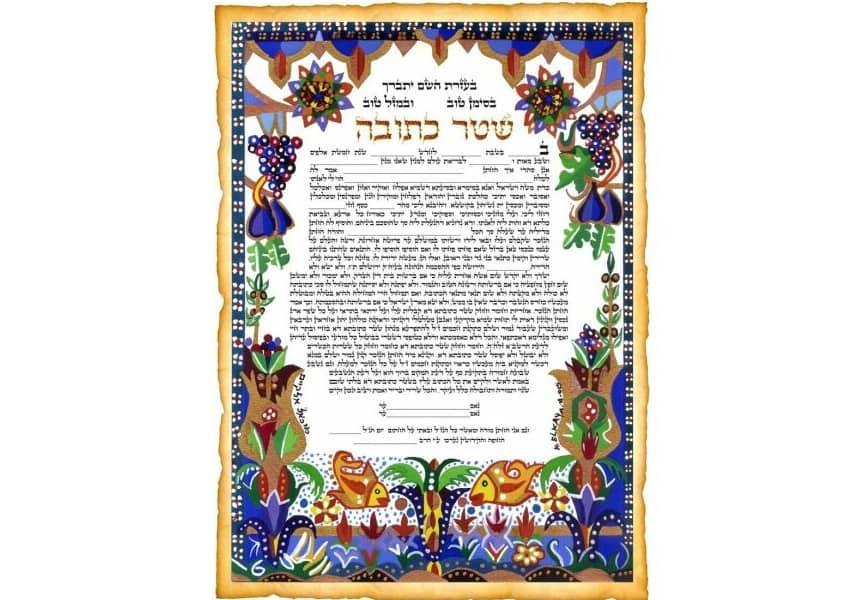
A couple is getting married, and neither knows who his or her father is; both were born through egg donation, and they do not want this to become public. How should this be written in the ketubah? Without parents’ names altogether? Or is it preferable to write the mother’s name? Or should another father’s name be read aloud so that they will not be embarrassed?

In addition, the bride’s mother underwent a gender transition and is known by a male name. If they simply write “ben Shlomo,” this would imply that he is a son. Must they specify “bat ha’ishah Shlomo”? Perhaps the simplest solution is not to write either the mother or father, and for the reader to read whatever he wishes.

Likewise, he is Ashkenazic; how should the text of the tena’im be formulated at the engagement?

Thank you.

Answer

Shalom u’vracha,

Strictly speaking, recording the father’s or mother’s name for the groom and/or bride is not indispensable to the writing of the ketubah at all. Even in the writing of a get, it does not invalidate it after the fact.

Generally, one may write the mother’s name in the ketubah, particularly where this concerns sperm donation from a sperm bank, the majority of whose donors are non-Jews. In such a case, the son or daughter has no halachic lineage to the father at all, as the poskim have written regarding one whose mother is Jewish and whose father is a non-Jew.

However, this applies only where there is no concern of error—that is, where the mother’s name is clearly identifiable as a woman’s name, so that people will not think it is the father’s name. But in the case described in the question, where the bride’s mother has a male name, her name should not be written, lest this lead to an error.

Therefore, in the case you describe, the parents’ names of both the groom and bride should not be written at all. Rather, it should state: “the groom, so-and-so, of the family of so-and-so,” and “the bride, so-and-so, of the family of so-and-so.” [Under no circumstances should an inaccurate name be written as the father’s or mother’s name, for this detracts from and invalidates the ketubah.]

This is how it should be written both in the ketubah and in the shtar tena’im, especially since the laws of the ketubah and the shtar tena’im are far more lenient than the laws of a get. They are merely documents of monetary obligation, and where there are witnesses to delivery, this is sufficient according to halachah.

With blessings for good news,

Rabbi David Ohayon

This response was translated automatically from Hebrew and has not yet been reviewed by a person. It may therefore contain inaccuracies and should not be considered a definitive reference.

Leave a Reply

Your email address will not be published. Required fields are marked *

PLEASE NOTE*

Attention: You should not learn from one case to another, each case must be analyzed individually. Generally speaking, it's always best to have contact with a Rabbi in person, not just virtual contact. Note that where there is a local Rabbi("Mara Deatra"), one should ask him. The answers are under the responsibility of the rabbi who responded, and not under the responsibility of the website and/or the Head of the Institution.

Advertise Here!
All proceeds are sacred To the Birkat Avraham organization. Also excellent charity, Advertising is also profitable for your business.

Didn't find an Answer?

Ask The Rabbi

Share us for friends

Last Articles

You may interested

Smart Search Within the Site ×
Ask us to pray for you!

Contact Us

Office

צור קשר

מזכירות: